Affiliate Disclosure: This page may contain affiliate links. If you buy through these links, PrintPilotLab may earn a small commission at no extra cost to you.
Storage & Workflow Guide
Best Filament Storage Boxes, Dry Boxes, and Cereal-Box Setups for 3D Printing
A practical beginner-friendly guide to keeping PLA, PETG, TPU, nylon, ABS, and ASA dry using cereal containers, gasketed totes, desiccant, hygrometers, dry boxes, and heated filament dryers.
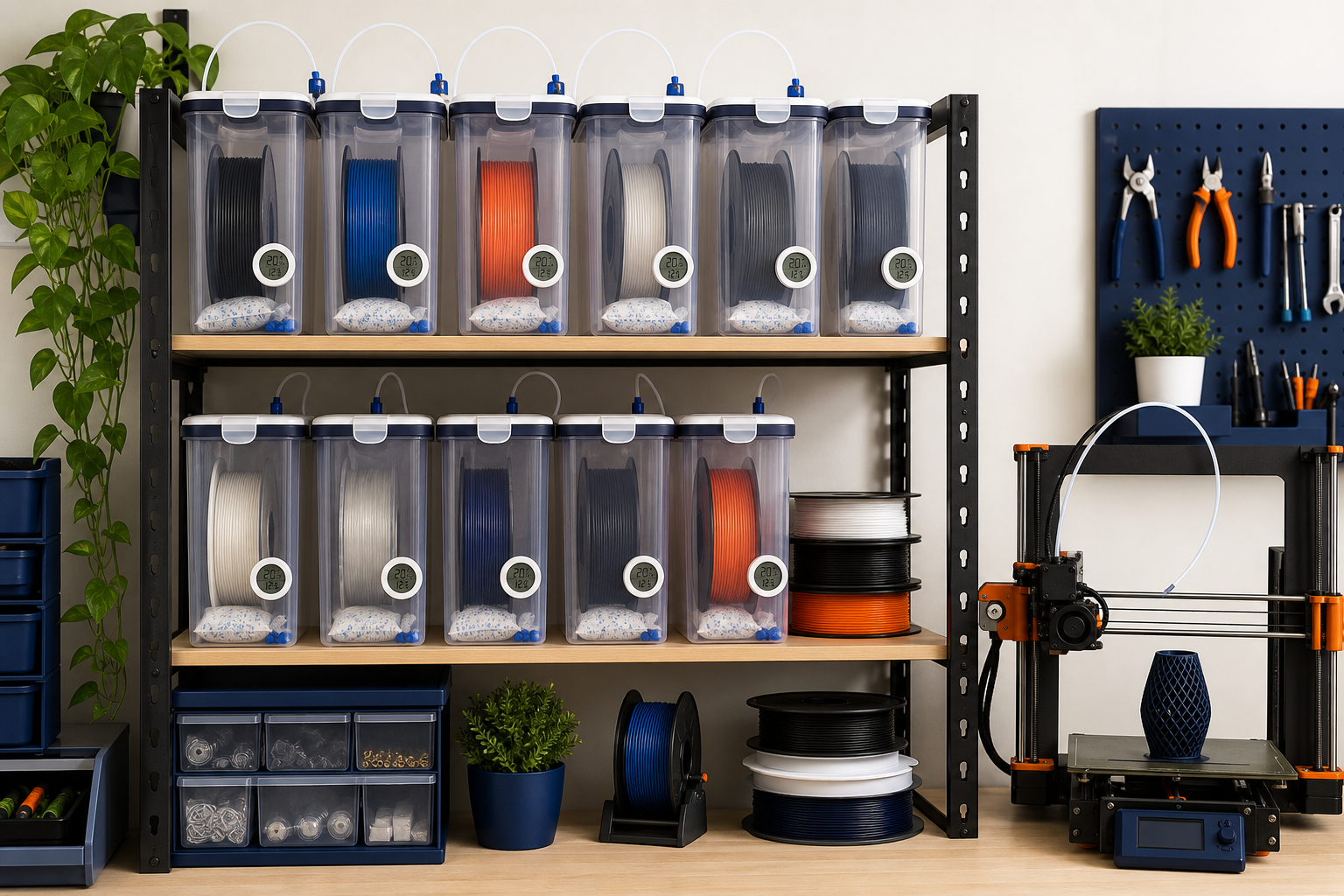
A good filament storage system does not need to be expensive. For most beginner and hobby 3D printers, the best setup is simple: keep everyday PLA and PETG in sealed containers with desiccant, use a hygrometer so you can see humidity, and save heated filament dryers for wet spools or moisture-sensitive materials like TPU, nylon, PETG, ABS, and ASA.
If you have ever opened a spool and noticed stringing, popping sounds, brittle filament, rough surfaces, or random under-extrusion, moisture may be part of the problem. This guide breaks down the best filament storage options, from cheap cereal-box containers to purpose-built dry boxes and heated dryers.
Quick Recommendation
Start with airtight cereal containers, rechargeable desiccant, and small digital hygrometers. Add a heated filament dryer later if you print PETG, TPU, nylon, ASA, or live in a humid area.
Quick shopping list
For the simplest filament storage setup, start with airtight cereal containers, rechargeable desiccant, and mini hygrometers. Add vacuum bags for long-term storage, a gasketed tote for bulk rolls, and a heated dryer if you print PETG, TPU, nylon, ASA, or live somewhere humid.
Best Filament Storage Options at a Glance
| Storage option | Best for | Pros | Watch out for |
|---|---|---|---|
| Airtight cereal containers | PLA, PETG, everyday spools | Cheap, stackable, easy to label, great for beginners | Check internal size before buying; not every cereal box fits a 1 kg spool |
| Plastic storage tote with gasket lid | Bulk spool storage | Holds many rolls, low cost per spool | Less convenient if you switch colors often |
| Vacuum bags | Long-term storage and backup rolls | Compact, inexpensive, good for unopened/rarely used filament | Pumps and seals can be annoying; bags wear out |
| Passive dry box | Printing directly from a dry container | Keeps filament protected while printing | Does not actively dry already-wet filament |
| Heated filament dryer | PETG, TPU, nylon, ASA, wet spools | Actively removes moisture; can improve print quality | Costs more and needs correct temperature/time settings |
1. Airtight Cereal Containers: The Best Beginner Setup
For most people, airtight cereal containers are the best first filament storage upgrade. They are inexpensive, easy to find, and usually fit neatly on a shelf. Each spool gets its own container, which makes it easy to grab one color without exposing your entire filament collection to room air.
Cereal-box filament storage
Use one airtight cereal container per spool, add a small bag or canister of silica gel desiccant, and place a mini hygrometer inside so you can see whether the container is staying dry.
- Good for PLA and PETG
- Great for color organization
- Easy to label by material, brand, and date opened
- Scales well as your filament collection grows
The key is size. A standard 1 kg spool is roughly 8 inches wide and 2.5 to 3 inches thick, but spool sizes vary by brand. Before buying a multi-pack, check the container’s interior dimensions, not just the advertised quart/liter capacity.
2. Storage Totes: Best for Bulk Filament
If you have a lot of filament, a gasketed storage tote can be more efficient than individual boxes. Add a few pounds of rechargeable silica gel or large desiccant packs, toss in one or two hygrometers, and keep similar materials together: PLA in one tote, PETG/TPU in another, specialty filaments in another.
This is the best low-maintenance option if you buy filament in bulk or keep backup rolls. The downside is convenience. Every time you open the tote, all the spools inside get exposed to room air. That is not a huge problem for PLA in a normal room, but it matters more for nylon, TPU, and very humid environments.
3. Vacuum Bags: Good for Long-Term Storage
Vacuum filament bags are useful for long-term storage, especially if you have rolls you will not use for months. They save space and slow down moisture exposure. They are also handy for seasonal colors, backup rolls, or materials you do not print often.
The tradeoff is hassle. You have to reseal the bag properly, use the pump, and check that the valve still holds. Vacuum bags are not my first choice for daily-use filament, but they are a solid second layer for long-term storage.
4. Passive Dry Boxes: Storage While Printing
A passive dry box is a sealed container designed so filament can feed directly to the printer while staying protected. Some people make these from cereal containers or gasketed tubs with PTFE fittings. Others buy purpose-built dry boxes with spool rollers and filament exit ports.
Passive dry boxes are great for keeping already-dry filament dry during long prints. They are especially useful for PETG, TPU, nylon, and other filaments that can absorb moisture during multi-hour jobs. But remember: a passive dry box does not fix wet filament. It only slows moisture from getting worse.
5. Heated Filament Dryers: When They Are Worth It
A heated filament dryer is worth buying if you print moisture-sensitive materials, live somewhere humid, or keep seeing moisture symptoms even after improving storage. PETG, TPU, nylon, polycarbonate, ABS, and ASA benefit more from active drying than basic PLA.
For PLA, a dryer is nice but not always necessary. Dry storage usually matters more. For nylon and TPU, a dryer can be the difference between clean parts and a stringy mess.
Rule of thumb: Storage prevents moisture problems. Dryers fix moisture problems. Ideally, use both: dry a wet spool, then store it in a sealed box with desiccant.
What Humidity Should Filament Be Stored At?
Aim to keep filament storage containers below about 30% relative humidity. Lower is better, but you do not need to obsess over a perfect number. If your container sits around 10–25% RH with fresh desiccant, you are in good shape for common materials like PLA and PETG.
If the hygrometer inside the container starts creeping above 30–40%, recharge or replace the desiccant. Many silica gel packs change color when saturated, but a cheap digital hygrometer is still the easiest way to confirm what is happening.
Desiccant: Silica Gel vs Molecular Sieve
Silica gel is the practical choice for most home 3D printing storage. It is cheap, rechargeable, and widely available. Use loose rechargeable beads in a breathable pouch or purpose-made canister, or use larger reusable packs.
Molecular sieve can pull moisture down very aggressively, but it is usually more expensive and overkill for beginner PLA/PETG storage. If you print nylon regularly, it can be worth considering. For most readers, rechargeable silica gel is the better buy.
How to Build a Simple Cereal-Box Filament Storage System
Pick airtight containers
Check interior dimensions and make sure your preferred spool brands fit before buying a large set.
Add desiccant
Use rechargeable silica gel packs or canisters. Keep them away from the filament path if you print directly from the box.
Add a hygrometer
Small digital humidity meters are cheap and remove the guesswork.
Label everything
Mark material, brand, color, nozzle temperature range, and date opened.
Which Filaments Need the Most Storage Care?
| Material | Storage priority | Notes |
|---|---|---|
| PLA | Medium | Store sealed with desiccant. Usually forgiving, but old/wet PLA can become brittle and stringy. |
| PETG | High | Can string badly when damp. Dry storage helps a lot. |
| TPU | High | Absorbs moisture and becomes stringy. Store carefully and dry before important prints. |
| ABS/ASA | Medium to high | Store sealed. Enclosure and ventilation matter too. |
| Nylon | Very high | Needs dry storage and active drying. Do not leave it sitting out. |
| PVA/support materials | Very high | Extremely moisture-sensitive. Keep sealed until needed. |
Common Filament Storage Mistakes
- Leaving spools mounted for weeks. If you are not printing with it soon, put the spool away.
- Using containers without a gasket. A normal plastic bin slows dust, but it is not the same as airtight storage.
- Trusting desiccant forever. Desiccant saturates. Recharge or replace it.
- Buying a dryer but not storing filament afterward. Drying helps, but the spool will absorb moisture again if left out.
- Ignoring spool size. Some cardboard and oversized spools may not fit smaller cereal containers.
Best Setup by Budget
Budget setup
Airtight cereal containers + rechargeable silica gel + mini hygrometers. This is the best starting point for most PLA and PETG users.
Better setup
Cereal containers for daily-use spools, a gasketed tote for bulk storage, and vacuum bags for long-term backup rolls.
Best setup for serious printing
Dry boxes for active materials, a heated filament dryer for wet spools, and sealed storage for everything when not in use.
FAQ
Can you store filament in Ziploc bags?
Yes, but they are not as reliable as airtight containers or proper vacuum bags. They are better than leaving filament exposed, especially with desiccant, but they are not ideal for long-term storage.
Do you need a filament dryer for PLA?
Not always. PLA usually does fine with sealed storage and desiccant. A dryer is useful if the PLA is old, brittle, popping during printing, or causing unusual stringing.
Can wet filament be fixed?
Often, yes. Use a heated filament dryer or carefully controlled drying method at the correct temperature for the material. Do not overheat PLA or TPU.
How long can filament sit out?
PLA may be fine for days or weeks in a dry room, but PETG, TPU, nylon, and support materials should be stored as soon as possible. Humidity matters more than the calendar.
Bottom Line
If you are building your first filament storage setup, do not overcomplicate it. Buy airtight containers that fit your spools, add rechargeable desiccant, drop in a hygrometer, and label each box. That simple cereal-box system solves most beginner storage problems for less money than a cabinet full of specialty gear.
Once you start printing PETG, TPU, nylon, ASA, or long multicolor jobs, add a heated dryer or print-from dry box. Storage keeps good filament good. Drying rescues filament after moisture has already caused problems.