Affiliate Disclosure: This page may contain affiliate links. If you buy through these links, PrintPilotLab may earn a small commission at no extra cost to you.
2026 Buying Guide
Best Resin 3D Printers Under $300
Budget MSLA resin printers that make sense for miniatures, tabletop terrain, jewelry-style prototypes, and high-detail hobby parts — plus the tradeoffs beginners need to know before buying.
Quick Answer
The best resin 3D printer under $300 for most beginners is the Elegoo Mars 5 Ultra when it is on sale, because it combines modern usability features with strong detail for miniatures and hobby prints. If you want the lowest entry cost, compare the Anycubic Photon Mono 4. If you want value on discount, the Elegoo Mars 4 Ultra and Anycubic Photon Mono 2 are still worth watching. For larger terrain or batch printing, consider the Creality HALOT-MAGE S only when street pricing drops near the $300 mark.
Resin printers under $300 can produce stunning detail, but they are not all equal. At this price, the buying decision is less about chasing one headline resolution number and more about the whole workflow: leveling, release reliability, build volume, slicer support, replacement parts, and how easily a new user can recover from failed prints.
This guide focuses on printers that make sense for real beginners and hobby users. Prices move constantly, so treat “under $300” as a street-price target. If a printer jumps above budget, wait for a sale or compare the next pick.
Budget warning
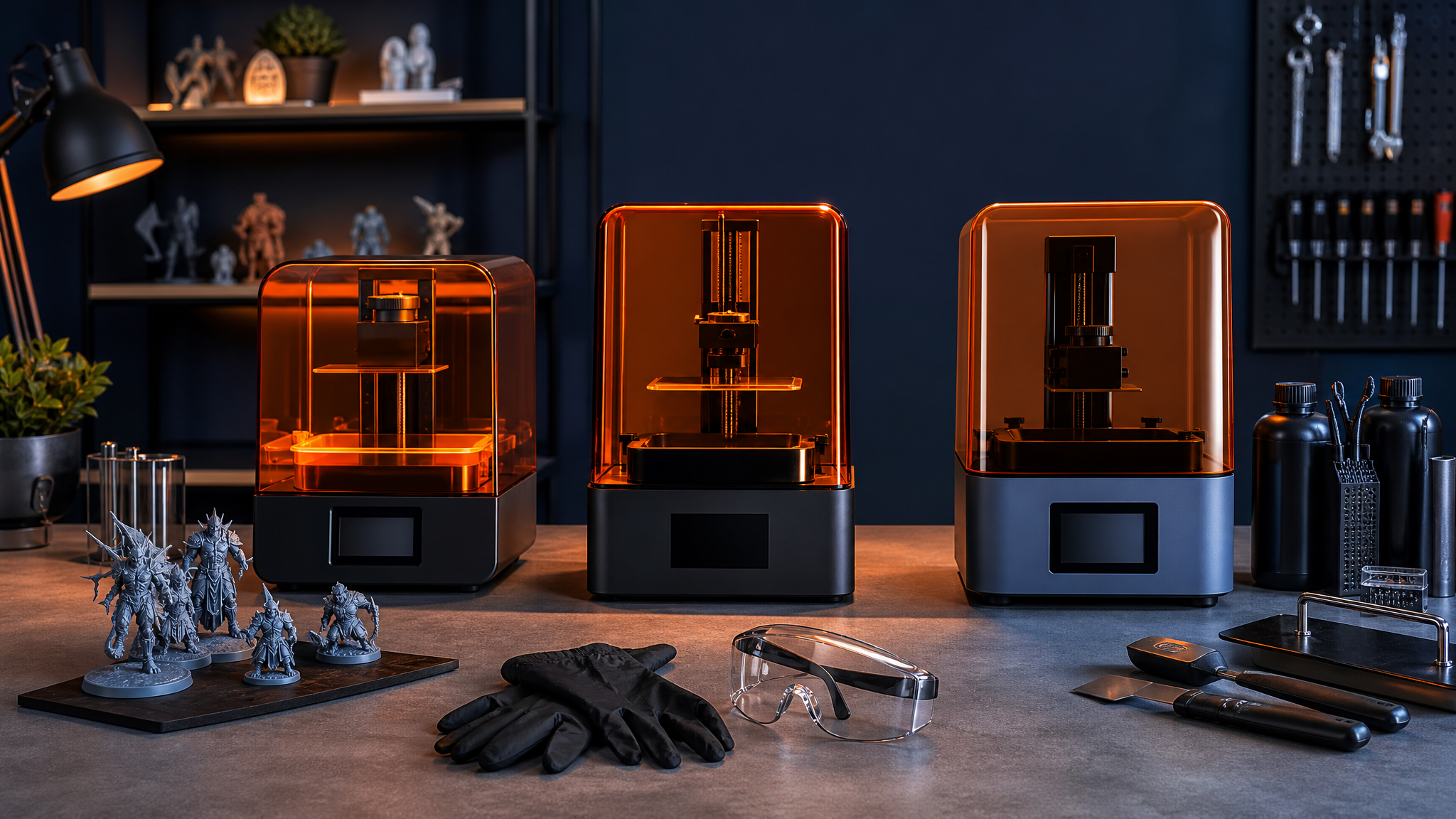
A resin printer is not the whole purchase. Budget for resin, nitrile gloves, eye protection, ventilation, a silicone mat, paper towels, spare release film, a wash-and-cure workflow, and safe waste handling. A $250 printer can easily become a $400 setup once the necessary accessories are included.
| Printer | Best Use Case | Main Strength | Main Weakness | Affiliate Link |
|---|---|---|---|---|
| Elegoo Mars 5 Ultra | Best overall budget resin printer | Modern beginner-friendly feature set and strong detail | Smaller build volume than larger Saturn-style machines | Check Price → |
| Anycubic Photon Mono 4 | Lowest-cost current starter pick | Good detail per dollar for first-time resin users | Fewer premium workflow features | Check Price → |
| Elegoo Mars 4 Ultra | Best value when discounted | Sharp detail and strong Elegoo community support | Older generation, so compare sale price carefully | Check Price → |
| Creality HALOT-MAGE S | Larger prints and batch terrain when on sale | More room for terrain, props, and batches | May float above $300; larger printers use more resin | Check Price → |
| Anycubic Photon Mono 2 | Cheapest low-risk starter | Small, simple, proven entry point | Small build volume and fewer modern conveniences | Check Price → |
🥇 Best Overall Under $300
Elegoo Mars 5 Ultra
Often near the top of the sub-$300 sale range | Best for: miniatures, display models, and first serious resin setup
Why we suggest it: The Mars 5 Ultra is the easiest recommendation when it fits the budget because it gives beginners a more modern resin-printing experience instead of just a barebones light box. For miniature painters, tabletop gamers, and hobby users who want crisp detail without immediately jumping into a larger $400–$700 machine, this is the first printer we would compare.
Strengths:
- Strong detail for miniatures, figures, terrain pieces, and small display parts.
- Better beginner fit than older budget machines because the workflow feels more modern and less experimental.
- Elegoo has a large user base, which makes resin settings, troubleshooting tips, and replacement-part advice easier to find.
- Good choice for users who care more about print quality and reliability than the absolute lowest price.
Weaknesses:
- The build area is still compact. It is not the best pick for helmets, large props, or big terrain plates.
- Like every resin printer, it still requires ventilation, PPE, washing, curing, and waste handling.
- If it is not on sale, the value gap between this and larger midrange resin printers gets smaller.
Best real-world use case: A tabletop gamer printing 28–75mm miniatures, busts, small terrain scatter, and replacement game pieces will get more value from this than from a cheap FDM printer because resin captures faces, armor, fabric folds, and tiny surface details far better.
Who should skip it: Users who mostly want functional brackets, workshop parts, cosplay armor, or large household objects should usually start with an FDM printer instead.
💰 Best Budget Starter
Anycubic Photon Mono 4
Usually one of the most affordable current starter options | Best for: first resin printer on a tight budget
Why we suggest it: The Photon Mono 4 makes sense for buyers who want to test resin printing without overspending. It is the “learn the process” pick: exposure tests, supports, washing, curing, cleanup, and small detail prints. If you are not sure whether resin printing will become a long-term hobby, this is the kind of machine that keeps the entry cost lower.
Strengths:
- Good entry price for people who want resin-level detail without a large upfront commitment.
- Compact footprint is easier to fit into a small workshop, garage bench, or dedicated resin station.
- Best suited for small models, miniatures, tokens, jewelry-style prototypes, and detail tests.
- Anycubic machines usually have plenty of community discussion, which helps beginners find starting exposure settings.
Weaknesses:
- Budget pricing usually means fewer comfort features than more expensive printers.
- Small build volume limits batch printing and large terrain pieces.
- If you already know you will print resin every week, spending slightly more for a stronger workflow may be worth it.
Best real-world use case: A beginner who wants to print a few D&D miniatures, board-game upgrades, small decorative objects, and resin calibration tests without committing to a larger resin setup.
Buying advice: If the Photon Mono 4 is only slightly cheaper than a Mars 5 Ultra during a sale, compare workflow features before choosing strictly by price.
🏷️ Best Discount Value
Elegoo Mars 4 Ultra
Best when discounted below newer Mars models | Best for: sharp detail on a proven platform
Why we suggest it: The Mars 4 Ultra is still worth considering because budget resin buyers often shop during sales. When older-but-capable printers drop in price, they can become better values than newer models at full price. This is a smart pick if you want Elegoo ecosystem support and high-detail hobby output but find the Mars 5 Ultra above budget.
Strengths:
- Capable of very detailed small prints when properly tuned.
- Elegoo community support helps with resin profiles, common failures, slicer workflows, and replacement parts.
- Good fit for miniature painters and hobby modelers who care about crisp surface detail.
- Often easier to recommend when sale pricing creates a meaningful gap below the newest model.
Weaknesses:
- Because it is not the newest Mars option, the price needs to be right. Do not overpay just because the specs look good.
- Still has the normal compact-printer limitation: batch printing and larger terrain can feel cramped.
- Beginners still need to learn supports, exposure, resin temperature, and cleanup.
Best real-world use case: A hobbyist who wants to print detailed miniatures and display models but is willing to buy the previous-generation value pick to save money for resin, wash-and-cure gear, and safety supplies.
Buying advice: Compare the final cart price against the Mars 5 Ultra. If the difference is small, we would usually lean newer. If the Mars 4 Ultra is meaningfully cheaper, it becomes a better value.
📏 Best Larger Option If It Drops Under Budget
Creality HALOT-MAGE S
Watch for sales near $300 | Best for: terrain, larger models, and batch printing
Why we suggest it: The HALOT-MAGE S is here for buyers who feel limited by small Mars/Photon-style build plates. More build area can matter more than raw resolution when you want terrain, larger display pieces, or multiple miniatures in one run. It is not always under $300, but when sale pricing gets close, it becomes worth comparing.
Strengths:
- Larger format gives more room for terrain, statues, props, and batch printing.
- Useful for users who want to print several small models at once instead of running the printer repeatedly.
- Better fit than tiny resin printers for tabletop terrain tiles, bases, and larger decorative pieces.
Weaknesses:
- Price may drift above the $300 target, so it is more of a “buy on sale” recommendation.
- Larger vats and plates can use more resin and make failed prints more expensive.
- Large resin printers need more workspace and a more disciplined cleaning setup.
Best real-world use case: A tabletop terrain maker who wants to print walls, ruins, bases, and batches of scatter pieces. The larger plate can save time by printing more per job.
Who should skip it: A first-time resin user with limited ventilation or workspace may be happier learning on a smaller printer before managing larger resin messes and larger failed prints.
🧪 Best Cheap Learning Machine
Anycubic Photon Mono 2
Often one of the lowest-cost resin entries | Best for: learning resin basics without overspending
Why we suggest it: The Photon Mono 2 is not the flashiest recommendation, but it still has a role: cheap resin learning. If your main goal is to understand whether you enjoy resin printing, a smaller low-cost printer lets you practice exposure tests, supports, cleaning, curing, and failure recovery before spending more.
Strengths:
- Low entry price leaves more budget for resin, gloves, ventilation, and wash/cure tools.
- Small size is easier to manage for users with limited workspace.
- Good for tiny models, detail tests, charms, tokens, and learning support placement.
- Lower-cost failed prints hurt less while you are learning.
Weaknesses:
- Small build volume becomes limiting if you want terrain, batches, or larger display parts.
- Fewer modern convenience features than newer budget machines.
- If you already know you want resin printing long term, buying too cheap can lead to upgrading sooner.
Best real-world use case: Someone curious about resin printing who wants to print small miniatures and learn the workflow before investing in a bigger printer.
Buying advice: This is a price-sensitive pick. It makes sense when it is clearly cheaper than newer alternatives, not when it is only a few dollars less.
06
How to Choose Between These Printers
If you want the safest overall pick: choose the Elegoo Mars 5 Ultra when it is under budget.
If you want the cheapest realistic entry: choose the Anycubic Photon Mono 4 or Photon Mono 2, depending on sale pricing.
If you want the most value on discount: compare the Elegoo Mars 4 Ultra against the Mars 5 Ultra and buy whichever gives the better final price/features mix.
If build volume matters most: watch the Creality HALOT-MAGE S, but only if you have room for a larger resin workflow.
Important: Do not buy purely by resolution numbers. A reliable workflow, replacement film availability, slicer support, and community settings can matter more than a spec-sheet win.
07
What Specs Actually Matter Under $300
- Build volume: Small printers are easier to manage, but larger plates help with terrain and batch printing.
- Screen and pixel size: Detail matters, but exposure tuning, resin quality, anti-aliasing, and supports also affect final results.
- Leveling and release behavior: Anything that reduces failed first layers and failed peels saves resin and frustration.
- Replacement parts: Check availability for FEP/release film, vats, build plates, screens, and covers.
- Community support: Popular printers are easier to troubleshoot because more users share settings and failure fixes.
08
What Else You Need to Buy
A resin printer needs a workflow around it. These accessories are not glamorous, but they prevent mess, failed prints, and unsafe handling.
09
Who Should Not Buy a Resin Printer Yet
Resin is excellent for detail, but it is not the best answer for every beginner. Skip resin for now if you cannot ventilate the space, cannot safely handle uncured resin, or mostly want large functional objects. For brackets, organizers, fixtures, cosplay armor, and household repairs, a beginner FDM printer is usually cheaper and easier to run.
PrintPilotLab Bottom Line
For most beginners shopping under $300, start by comparing the Elegoo Mars 5 Ultra and Anycubic Photon Mono 4. Pick the Mars 5 Ultra if you want the stronger overall experience; pick the Photon Mono 4 if keeping the entry price low matters most. If a larger printer like the HALOT-MAGE S drops near budget, consider it only if you have the workspace and resin-handling setup to match.