Beginner Cost Guide
How Much Does It Cost to 3D Print Something?
A plain-English breakdown of filament, electricity, failed prints, wear parts, and the hidden cost beginners often forget: time.
Quick Answer
Many small 3D prints cost less than $1 in filament. Medium prints often cost $1–$5. Large prints can cost $10–$50+ depending on size, material, infill, failures, and finishing. Electricity is usually a smaller cost than filament, but failed prints and your time can matter a lot.
The cost of a 3D print is not just “grams of filament.” For hobby use, filament is the main number. For selling prints, you also need to account for machine time, failed prints, packaging, labor, and wear.
01
Filament Cost
Most 1 kg PLA spools cost roughly $15–$30. If a model uses 50 grams of filament, the raw plastic cost is about 5% of the spool price. On a $20 spool, that is about $1 before failures or finishing.
02
Electricity Cost
FDM printers use power for the hotend, heated bed, motors, fans, and electronics. For most small hobby prints, electricity is usually measured in cents rather than dollars, though long prints and high bed temperatures add up over time.
03
Failed Prints and Waste
Beginners should budget for failed prints. A $2 part becomes a $4 part if the first attempt fails. Better first-layer setup, dry filament, and proven slicer profiles reduce waste.
04
Wear Parts and Consumables
Nozzles, build plates, glue, isopropyl alcohol, gloves, blades, sandpaper, and replacement parts are small but real costs. Resin printing also adds PPE, wash liquid, supports, and cleanup supplies.
05
Simple Cost Formula
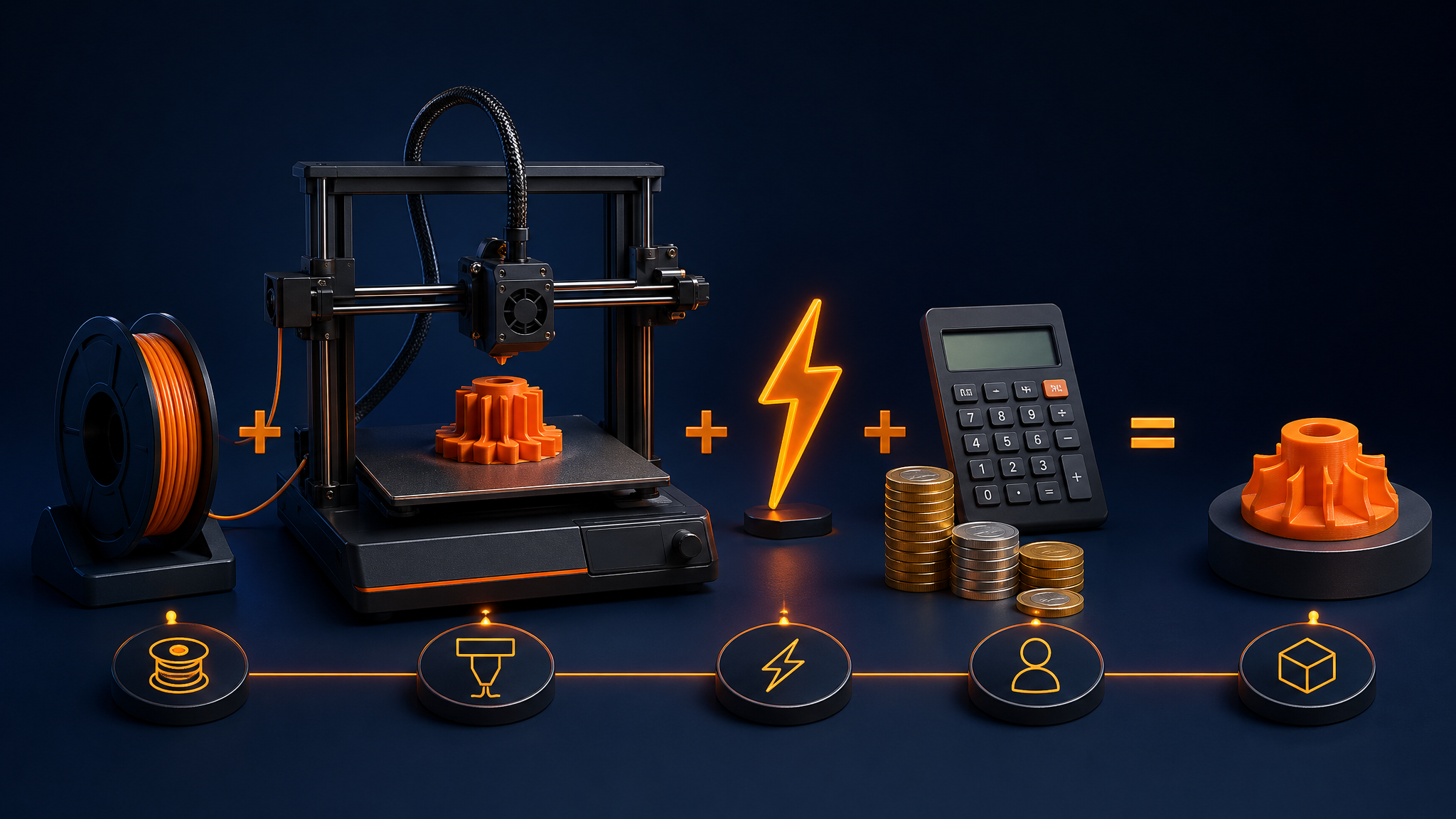
Estimated cost = filament cost + electricity + failure allowance + finishing supplies + labor/time.
Related PrintPilotLab Guides
Cost depends heavily on settings. Start with slicer settings that actually matter and avoid beginner mistakes that waste filament.
FAQ
Is 3D printing cheaper than buying parts?
Sometimes. It is best for custom parts, prototypes, repairs, and low-volume items. Mass-produced items are often cheaper to buy.
How do I calculate filament cost?
Divide spool price by 1,000 grams, then multiply by the grams used in your slicer estimate.
Is resin printing more expensive than FDM?
Often, yes. Resin can include higher material cost, supports, cleanup supplies, PPE, and post-curing equipment.
Print better with fewer surprises
Use this guide with PrintPilotLab’s beginner setup, slicer settings, and troubleshooting resources to make smarter printing decisions.